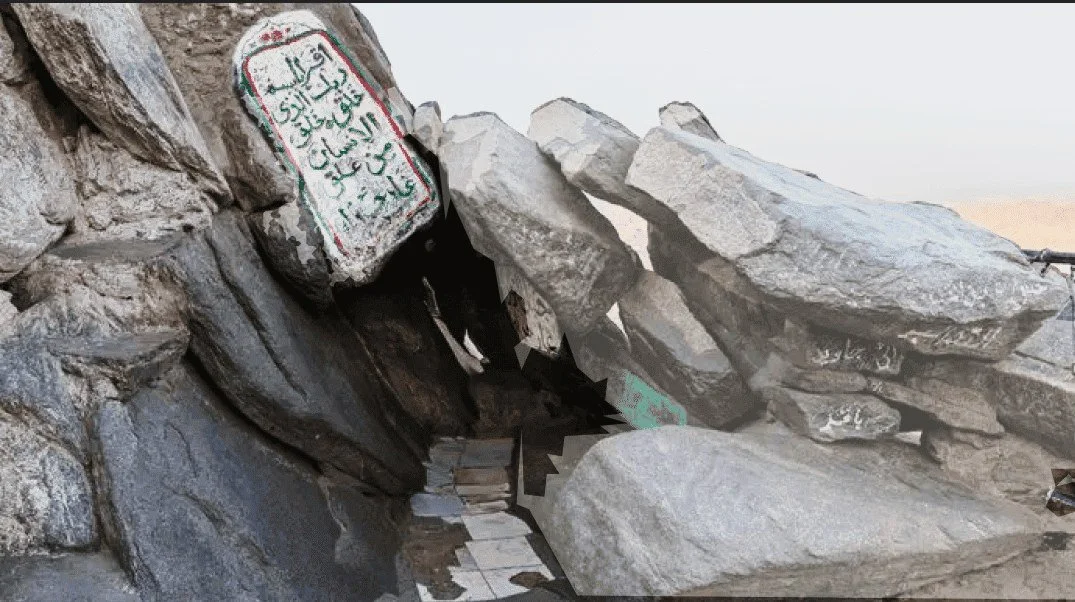
Re-rooting Education in Revelation
Reviving the use of al-Mabādīʾ al-ʿAshara
Restoring the Epistemic Foundations for Islamic Education
Course Description
This course offers a rigorous, historically grounded, and normatively guided introduction to the application of al-Mabādīʾ al-ʿAshara—the ten foundational principles—to contemporary education. These were traditionally used to organize knowledge and establish the legitimate boundaries of all branches of knowledge. The course situates the mabādīʾ within their historical emergence, epistemic function, and contemporary educational relevance. The aim is not merely to transmit content, but to cultivate epistemic responsibility, intellectual humility, and pedagogical clarity.
The Arabic word mabādiʾ (singular: mabdaʾ) comes from the root b-d-ʾ, meaning “to begin” or “to initiate.” Linguistically, mabādiʾ refers to starting points or first principles. When applied to education, the ten mabādiʾ provide an epistemic frame—a shared way of understanding what knowledge is, how learning unfolds, and why learning matters within the context of a Qur’anic worldview.
Course Objectives
By the end of this course, participants will be able to:
Understand the historical conditions that necessitated the formulation of the mabādīʾ.
Articulate each of the ten principles as an operative epistemic rule.
Diagnose contemporary epistemic confusion using the mabādīʾ framework.
Apply the mabādīʾ to diverse contemporary educational contexts.
Distinguish between legitimate synthesis and epistemic distortion.
Course Structure (4 Lectures)
The First Epistemic Shock: Translation Movement, Resulting Crisis
Containment and Synthesis: From Crisis to Pedagogical Order: Three Centuries of Intellectual Jihād
The Mabādīʾ as Epistemic Grammar
al-Ḥadd: Defining as Epistemic Act
al-Mawḍūʿ: Subject Matter and Epistemic Scope
al-Masāʾil: Legitimate Questions and the Internal Structure of a Branch of knowledge
al-Ghāya / al-Thamara: Purpose, Fruit, and the Teleology of Knowledge
al-Istimdād: Sources, Authority, and Epistemic Derivation
al-Nisba: Relational Placement and the Order of the Branches of Knowledge
al-Ḥukm: Legal Status, Obligation, Permissibility, and the Moral Status of Knowledge
al-Wāḍiʿ
al-Faḍl: Origin, Authority, and the Merit of the Sciences
Pedagogical Method
Conceptual lectures grounded in classical sources
Diagnostic engagement with modern educational assumptions
Structured discussion rather than open-ended debate
Emphasis on hierarchy, restraint, and clarity
Intended Audience
Educators and curriculum designers
Teacher-training institutes
Researchers concerned with epistemology and pedagogy
University Professors in departments of education
Advanced students of Islamic knowledge
II. Course Preface
Why This Course Exists
This course has been conceived in response to a persistent modern condition: the fragmentation of knowledge and the erosion of epistemic authority and responsibility. Contemporary education often transmits information without orientation, technique without purpose, and critique without criteria. The Islamic intellectual tradition confronted a similar crisis centuries ago, when translated sciences from the Greek and Latin traditions challenged inherited frameworks of meaning.
The response was neither rejection nor uncritical adoption. It was discipline.
Al-Mabādīʾ al-ʿAshara emerged as a pedagogical technology designed to protect the Qurʾān-centred framework of knowledge. They curtailed the emerging chaos, preserved the tawḥīdī perspective, reoriented knowledge to its source, and corrected the qibla of those who pursued it. These foundational principles teach us how to ask, when to ask, and whether we should ask at all.
This course insists that epistemology is never neutral. Knowledge shapes souls, societies, and futures. To study without structure is to invite confusion; to teach without hierarchy is to betray responsibility. The mabādīʾ offer a grammar of knowing that is at once rigorous and applicable to contemporary educational systems around the world, and essential for transforming Muslim schools into truly Islamic institutions. This is not a nostalgic return to the past, nor an apologetic defense of tradition. It is an invitation to recover a mode of thinking capable of engaging modern complexity without surrendering intellectual integrity.
III. Teacher-Training Modules
Module 1: EPISTEMIC DIAGNOSIS
Aim: Train educators to identify epistemic confusion before curricular failure occurs.
Key Skills:
Detecting misnaming and scope creep
Identifying illegitimate borrowing
Recognizing inverted hierarchies of value
Application: Curriculum review, institutional assessment, self-evaluation, foundational understanding of the Islamic approach to knowledge, and an essential toolkit for teachers.
Module 2: ORDERING KNOWLEDGE
Aim: Enable teachers to structure courses using epistemic priority rather than convenience.
Key Mabādīʾ:
al-Ḥadd, al-Mawḍūʿ, al-Masāʾil
Application: Course design, curriculum/syllabus construction
Module 3: TEACHING WITH PURPOSE
Aim: Align teaching practices with al-ghāya / al-thamara.
Key Skills:
Distinguishing outcomes from outputs
Evaluating learning by transformation, not performance
Application: Assessment design, learning outcomes
Module 4: SOURCE INTEGRITY AND AUTHORITY
Aim: Train educators to declare and discipline epistemic sources.
Key Mabdaʾ:
al-Istimdād
Application: Interdisciplinary teaching, textbook selection
Module 5: RELATIONAL AWARENESS
Aim: Prevent disciplinary isolation and imperialism.
Key Mabdaʾ:
al-Nisba
Application: Program design, cross-department collaboration
Module 6: MORAL EVALUATION OF KNOWLEDGE
Aim: Restore ethical judgment to educational decision-making.
Key Mabdaʾ:
al-Ḥukm
Application: Student advising, curriculum prioritization
Module 7: HONORING INHERITANCE, EVALUATING MERIT
Aim: Teach educators to situate themselves within a living tradition.
Key Mabādīʾ:
al-Wāḍiʿ, al-Faḍl
Application: Institutional vision, scholarly formation
Concluding Note and duʿā
This framework is not a closed system. It is a discipline of attention, humility, and responsibility. Its success is not measured by expansion, but by clarity; not by novelty, but by soundness.
May Allah Most High grant us the sight to see foundational cracks in our Muslim education system, grant us tawfīq and bless those who teach with insight, learn with sincerity, and order knowledge with its true right: the tawḥīdī framework.