

Muslim Education Foundation (MEF) was established in 2005 as a not-for-profit organization.
MEF is committed to nurturing a learning process built upon the Qur’anic worldview. The Prophet, upon him blessings and peace, who was the best of all teachers and a model par excellence for every Muslim, was the first to use this method to teach his Companions, may Allah be pleased with all of them. Since then, generations of Muslim teachers and learners have benefited from this particular approach to knowledge which has produced a formidable tradition of scholarship.
Governing Structure of MEF
The Muslim Education Foundation operates under the leadership and guidance of a distinguished international Board of Advisors and a dedicated local Board of Directors. These governing bodies ensure that our mission remains focused on academic excellence, intellectual growth, and the promotion of meaningful learning experiences.
MEF Board of Advisors
MEF is privileged to have the wisdom and expertise of three highly esteemed scholars on its international Board of Advisors. These senior scholars, recognized for their immense contributions to Islamic thought and education, provide valuable insights to guide the foundation’s vision and initiatives.
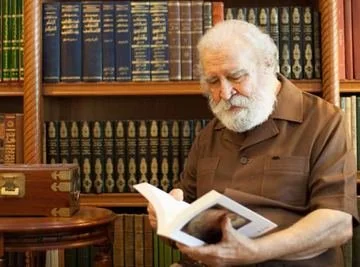
Syed Muhammad Naquib al-Attas (1931–2026)
Innā liLlāhi wa innā ilayhi rājiʿūn.
The Muslim Education Foundation (MEF) mourns the passing of one of the most profound intellectual figures of the contemporary Muslim world, Syed Muhammad Naquib al-Attas (5 September 1931 – 8 March 2026), who returned to his Lord at the age of 94.
A member of the MEF Board of Advisors since its founding in 2005, al-Attas was not only a scholar of rare depth and range, but a thinker who sought to restore the very foundations of knowledge in Islam.
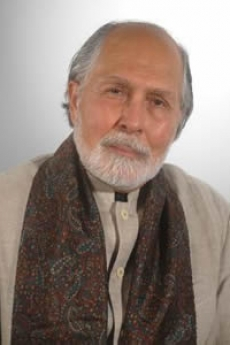

MEF Board of Directors
The Muslim Education Foundation’s Board of Directors consists of dedicated professionals and scholars committed to advancing the foundation’s mission. They oversee strategic planning, program development, and organizational growth, ensuring that MEF continues to provide high-quality educational opportunities and meaningful research in Islamic thought and sciences.
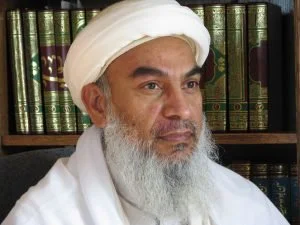
Muzaffar Iqbal - President
Muzaffar Iqbal has written more than 50 articles on various aspects of Islamic intellectual tradition, including Islamic Education and theories of ilm al-nafs, the science of the inner resources. Over the last thirty years, he has given numerous lectures on education in major universities in USA, Malaysia, Pakistan, Iran, Syria and other countries. Click here for more information on his work.
Abir Ebrahim - Vice President
Abir Ebrahim is a settlement counselor at Catholic Social Services Edmonton. She is the founder of Amana Academy, which has established a private Islamic school in Edmonton, Alberta.
Shaykh Sherif - Vice President, Religious Affairs
Shaykh Sherif graduated from Al Azhar University, Faculty of Languages and Translation, Department of Islamic Studies in English (2004-2008) and served as an Imam in Egypt (2009-2011), before moving to USA to serve as an Imam at the Omar Haikal Islamic Academy In Las Vegas, NV (2011-2013). He served as an Imam at Masjid Ismail Bullhead City, AZ (2013 -2016), and then moved to Edmonton where he was the Imam of the Al-Rashid Masjid. Current he is the Imam of MCE Masjid (2016- ).
Abu Khalifa - Secretary Treasurer
Abu Khalifa is a structural engineer. He has deep roots in Islamic education, first in Tanzania and now in Sherwood Park, Alberta.
Transformative Learning is a process that leads to self-transformation. Unlike theoretical learning that imparts information, even knowledge in a certain mundane sense, without actually affecting the inner core of the learner, this process transforms each and every learner in the very process of learning; this transformation takes place through ma`rifah, gnosis, gained during the process—an understanding that the learner is a created human being, possessing a specific innate nature, fitrah, and capable of living a life fully conscious of the purpose for which he or she has been created in harmony with his or her fitrah.
Transformative Learning is a life-long process toward a definitive goal: success as defined by the Qur’an. The Qur’anic definition of success, falah, not only simplifies the questions about the purpose of education and its methodology, it also provides an orientation to the entire process of learning. It seamlessly encompasses the life of this world as well as that of the Hereafter by infusing every step of learning with the consciousness of the Creator.
Transformative Learning was the approach used by the Prophet, peace be upon him, and his Companions—may Allah be pleased with them all. They did not study the Qur’an nor any of the other sciences without applying their learning to themselves. The Prophet sought refuge in Allah from useless knowledge and an oft-repeated prayer of his was for Allah to grant him useful knowledge. Useful knowledge is, by definition, a knowledge that is purposeful, and purpose of life defined by the Book of Allah. Knowledge must, therefore, lead to the transformation of the way we live and establish our relations with the world and all it contains and this transformation is what makes us active and constructive participants in society and thereby leads to the transformation of the entire society.
Attuning our thoughts and actions to our fitrah also produces a much greater harmony with all else that exists around us as well as with the natural rhythm of the cosmos. This harmonic relationship creates a balance in the greater universe of which we are but a small part. If we achieve a conscious understanding of
these fine balances, we come to respect everything around us as part of a great chain of creation; our appreciation and respect for the environment and the various species of plant and animal life grows. Since in transformative learning the focus always remains on the Qur’anic message, one avoids pitfalls, such as nature worship and other cultish trends, which sometimes creep into such cosmic attitudes.
This approach to learning, rooted in the Qur’an as it is, leads the learner to an understanding of his or her place in this universe in which the presence of an ant is as significant as that of a gigantic whale. The process of transformative learning applies this understanding to shape the worldview of the learner, leading to the recognition of teleology in all aspects of life.
Transformative learning is a process. A process is, by definition, a systematic series of actions directed to an end. That is, in this approach, learning is not an end in itself, but a means; the ultimate goal is success as defined by the Qur’an. The Qur’anic definition of success encompasses the life of this world as well as that of the Hereafter. The process of transformative learning is, therefore, a life-long process. Beyond the many alternative approaches to education suggested by some twentieth century educators in the East and the West, the time-tested process of transformative learning used for centuries by generations of Muslims ensures that the learner remains perpetually conscious of the actual goal of learning. This process clearly distinguishes between various components of the process of learning—such as skills, techniques, tools, and information—and establishes a hierarchy in which each component has a place of its own. The process of transformative learning also distinguishes primary from secondary or tertiary concepts and derived ideas from foundational principles, and gives each their due. This demarcation is helpful for both teachers and students, and imparts an order to the learning process that builds successively without compartmentalizing learning.